Robert Stroud: The Violent Criminal Who Became the Legendary Birdman of Alcatraz

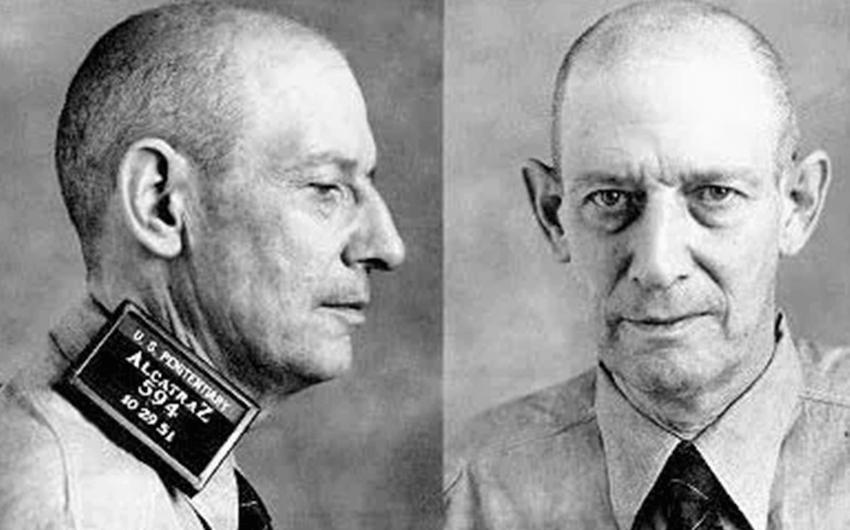
Robert Stroud remains one of the most fascinating figures in American criminal history because his life never fits neatly into a single label. He was a killer, a long-term federal prisoner, a self-taught bird expert, and eventually a man transformed by myth almost as much as by fact. His name still draws attention because his story sits at the uneasy intersection of brutality, intelligence, isolation, and the strange power of public reinvention.
Who Robert Stroud Was
Robert Stroud was born in Seattle in 1890 and became known to the wider public as the “Birdman of Alcatraz.” That nickname sounds almost poetic, but the real man behind it was far less gentle than popular culture later suggested. Before the legend formed, Stroud had already entered a violent life that led to serious criminal convictions and decades behind bars. His notoriety did not begin with birds. It began with homicide, prison violence, and a personality that authorities considered deeply dangerous.
That contrast is what keeps his story alive. People are drawn to Robert Stroud because he seems to represent two conflicting truths at once. On one hand, he was a convicted murderer with a long record of severe institutional trouble. On the other, he developed genuine knowledge in ornithology and produced respected written work on bird diseases while incarcerated. Few American prisoners have generated such a powerful clash between documented violence and unexpected intellectual achievement.
His Early Life and First Conviction
Stroud’s early life was unstable, and he left home while still young. By the time he was a teenager and then a young adult, he was already moving through a harsh world shaped by survival, exploitation, and street-level criminality. In Alaska, he became involved in a violent incident that led to his first major conviction. That conviction, for manslaughter, marked the beginning of the prison life that would define nearly everything that followed.
It is important to remember that Robert Stroud was not someone swallowed by prison after a single tragic misunderstanding. Even early on, his life showed a pattern of aggression and volatility. This matters because later retellings often softened him into a misunderstood eccentric, as if the birds somehow erased the bloodier parts of his past. They did not. His later work may have been real and significant, but it grew out of a life already marked by serious violence.
The Murder That Changed Everything
While serving his original sentence at the federal penitentiary in Leavenworth, Stroud committed the act that made him one of the most infamous prisoners in American history. In 1916, he killed correctional officer Andrew F. Turner inside the prison. That murder permanently changed how prison authorities viewed him. He was no longer merely a violent inmate with a prior homicide conviction. He became a man who had killed a guard while already in custody, a fact that ensured he would be treated as exceptionally dangerous for the rest of his life.
The killing also shattered any simple redemption arc people might want to build around him. A prisoner who murders a prison officer enters a different category in the public imagination and in the correctional system itself. That is one reason Stroud spent so much of his life under extreme confinement. Authorities did not see him as difficult. They saw him as lethal. This detail is central to understanding the real Robert Stroud, because it explains why his long isolation was not just a dramatic element of the legend but a direct consequence of how dangerous he was believed to be.
How the Birdman Story Began
The “Birdman” identity did not begin at Alcatraz, despite the nickname that later made him famous. His work with birds developed earlier, during his years at Leavenworth. There, Stroud began caring for birds and then studying them with remarkable seriousness. Over time, he became deeply interested in canaries, bird breeding, and avian disease. What started as care and observation grew into intensive self-education, and eventually into published writing that attracted attention beyond prison walls.
This part of the story is not just sentimental decoration. It is the most unusual feature of his life. In prison, under circumstances that were already severe, Stroud developed expertise that many educated outsiders respected. He wrote about bird diseases and contributed to the study of avian health in a way that made his name known for reasons unrelated to murder. That transformation did not make him innocent or gentle, but it did make him historically distinctive. Very few inmates have ever built a second reputation so intellectually substantial while still serving time for extreme violence.
Why He Was Called the Birdman of Alcatraz
The nickname that made Robert Stroud famous is also one of the most misleading parts of his story. He became widely known as the “Birdman of Alcatraz,” but the bird work that defined his legend belonged to an earlier phase of imprisonment, not to the island prison that later became permanently attached to his image. The label survived because it sounded dramatic and memorable, not because it was strictly accurate.
This matters because it shows how myth can overtake history. Alcatraz was already one of the most famous prisons in America, built to hold the most violent, disruptive, and escape-prone inmates. Linking Stroud’s bird scholarship to that setting made the contradiction in his life seem even more cinematic. A killer studying birds in one of the harshest prisons imaginable is a story people remember instantly. But the clean symbolic version is not the same thing as the precise historical version.
His Years at Alcatraz
Stroud was eventually transferred to Alcatraz, the federal prison that housed many of the nation’s most notorious inmates. By then, he was already a legendary prison figure. Alcatraz was designed for inmates regarded as especially dangerous or unmanageable elsewhere, and Stroud fit that profile. His presence there reinforced the prison’s reputation and helped turn him into a larger-than-life symbol of the American penal system.
Yet Alcatraz did not continue the bird-centered phase of his life. Instead, it represented another chapter of intense confinement and institutional control. That is one reason the popular image of Stroud often feels emotionally confused. People want him to be either a monster or a misunderstood genius. Alcatraz encourages both readings at once. It confirms his danger while also amplifying the legend of the brilliant, isolated prisoner whom the world prefers to imagine as tamer than he really was.
The Gap Between the Man and the Myth
Much of Robert Stroud’s afterlife in public memory comes from the gap between who he was and how he was portrayed. The film Birdman of Alcatraz helped make him a household name and presented a softened, sentimentalized version of his life. That portrayal emphasized his humanity, his intelligence, and his relationship with birds, while downplaying the darker and more violent realities that prison officials never forgot.
That correction is essential. Popular culture loves a redemption story, especially one built around intelligence blooming in confinement. But Robert Stroud was not simply a gifted inmate redeemed by study. He was also a repeat killer whose conduct inside prison remained central to why authorities treated him with such severity. The legend survives because it is dramatic. The reality survives because official records never fully romanticized him.
Why Robert Stroud Still Fascinates People
Robert Stroud continues to fascinate readers because his story resists moral simplification. People are used to historical figures who can be filed under easy headings such as villain, victim, genius, or reformer. Stroud will not stay in one category. He committed serious violence, yet demonstrated discipline and intellect. He became famous as a prisoner, yet that fame rested partly on misunderstanding. He made meaningful scholarly contributions, yet those contributions never erased the fact that he had taken lives. That tension keeps the story alive generation after generation.
There is also something haunting about the sheer scale of his imprisonment. Stroud spent most of his adult life behind bars, much of it in solitary confinement. Those facts alone explain part of his grip on the public imagination. Long-term isolation changes the way people think about punishment, transformation, and survival. Whether someone sees him primarily as a dangerous criminal or as a deeply complicated human being, it is impossible to ignore how extreme the conditions of his incarceration were.
What His Story Says About American Prison History
Stroud’s life also matters because it opens a window into a harder era of American prison history. His years in federal institutions overlapped with a period when prisons were not only places of punishment but also institutions trying to define what control, discipline, and reform should look like. Leavenworth and Alcatraz each represented powerful ideas about how the state handled people it regarded as dangerous. In that sense, Robert Stroud is not just an individual case. He is part of the larger history of how America imagined its worst prisoners and what should be done with them.
His story also exposes how quickly the public can reshape criminal history into usable myth. Once film, nickname, and repetition take over, the real person begins to blur. Stroud became a symbol of contradiction: a brutal inmate turned bird scholar, a feared prisoner turned tragic icon, a violent man made almost noble through narrative compression. That transformation says as much about the audience as it does about him. People often want crime stories that leave room for wonder, and Robert Stroud provided exactly that.
The End of His Life and His Lasting Reputation
Robert Stroud died in 1963 after spending the overwhelming majority of his adult life in confinement. By then, he had already become larger than the prison system that once tried so hard to control him. His reputation had moved into books, journalism, popular memory, and film. Even today, many people know the nickname before they know the man. That alone shows how thoroughly the legend took hold.
But the lasting importance of Robert Stroud is not that he was easy to admire. It is that he forces a more uncomfortable kind of attention. He reminds readers that intelligence and brutality can exist in the same life, that prison myths can overwhelm prison facts, and that some historical figures remain compelling precisely because they refuse to become morally tidy. Robert Stroud endures not because he was innocent, and not because he was redeemed in any simple way, but because his life remains one of the strangest and most unsettling stories in American criminal history.
Noted for future articles as well: I’ll keep them stripped of content references and citations by default.
image source: https://www.britannica.com/biography/Robert-Stroud