Ray Kroc Net Worth At Death And How McDonald’s Made Him Rich

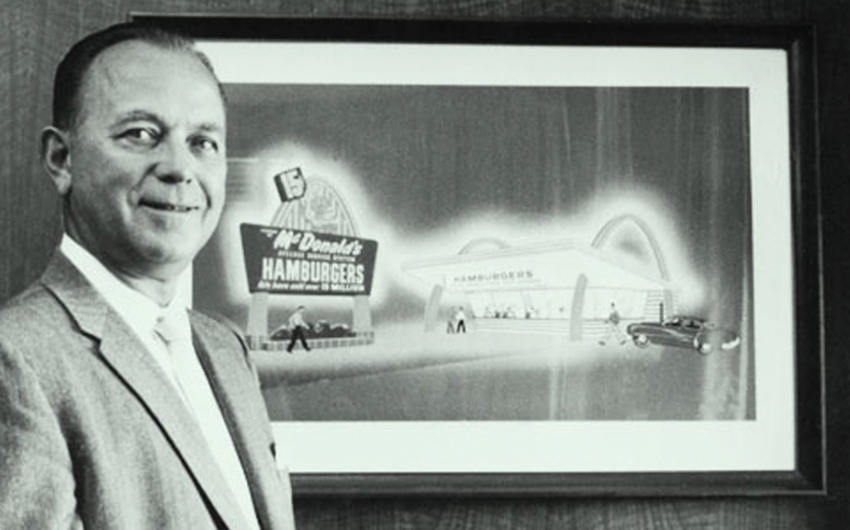
If you’re searching Ray Kroc net worth, you’re really asking how the man who turned McDonald’s into a global machine ended up insanely wealthy. Ray Kroc’s fortune came from a very specific playbook: control the real estate, collect the rent, and scale the system faster than anyone else could copy it.
Let’s break down what his net worth was estimated to be, how he built it, and why his strategy still gets studied in business today.
Quick Facts About Ray Kroc
- Full Name: Raymond Albert Kroc
- Known For: Expanding McDonald’s into a global franchise empire
- Born: 1902
- Died: 1984
- Estimated Net Worth At Death: Commonly reported in the hundreds of millions (often cited around $500M)
- Big Wealth Driver: Franchise system + real estate control through the McDonald’s model
Ray Kroc Net Worth At The Time Of His Death
Ray Kroc’s net worth at the time of his death in 1984 is most commonly reported at around $500 million. Some estimates vary depending on how people value private holdings, business stakes, and assets at the time, but the big point is consistent: he died extremely wealthy, especially for his era.
It’s also important to understand what that number means. Net worth isn’t “cash in a bank.” It’s the total value of what he owned—business interests, assets, investments, and other holdings—minus what he owed. With someone like Kroc, much of that value was tied to the McDonald’s ecosystem and the wealth-building structure he created around it.
Who Was Ray Kroc, Really?
Ray Kroc wasn’t the original founder of McDonald’s. The McDonald brothers—Richard and Maurice—built the early restaurant concept and the fast, efficient “Speedee Service System.” Kroc came later, but he saw something most people missed: this wasn’t just a great burger stand. It was a repeatable system that could be franchised into a nationwide (and eventually global) operation.
His real skill wasn’t cooking or restaurant design. It was scaling. He understood sales, operations, consistency, and psychology—how to make customers trust that a Big Mac in one city would taste like a Big Mac everywhere.
How Ray Kroc Made His Money
1) Franchise Fees And Royalties
At the simplest level, McDonald’s makes money through franchising: entrepreneurs pay for the right to operate under the brand, and they pay ongoing fees for the privilege. Kroc pushed franchising aggressively because it allowed McDonald’s to grow fast without the company paying for every location’s full operational overhead.
Franchise income typically comes in a few layers:
- Initial franchise fees (upfront payments)
- Ongoing royalties (a percentage of sales)
- Advertising contributions (supporting national branding)
Even if each single fee looks modest, the power comes from scale. Hundreds of locations become thousands. Thousands become global. And every store that sells food keeps feeding the system above it.
2) The Real Estate Move That Changed Everything
This is the part that made Ray Kroc truly dangerous—in the smartest business way. He understood that restaurants can struggle with profit margins: food costs go up, labor costs go up, and competition is always trying to undercut you. But real estate can be a different story.
Kroc pushed a model where the company (through its real estate structure) would control the land and/or the building, then franchisees would operate the restaurant and pay rent. This created two huge advantages:
- Reliable income: rent payments can be steadier than profit on burgers.
- Control: if a franchisee didn’t follow the rules, McDonald’s had leverage because the location itself was tied to the company.
In plain terms: Kroc didn’t just want McDonald’s to sell food. He wanted McDonald’s to become a real estate business disguised as a restaurant company. That’s a major reason his wealth grew so large.
3) Owning The Brand, Not Just Managing It
One key reason Ray Kroc’s net worth became enormous is that he didn’t simply work as an executive collecting a salary. He built ownership and control—meaning the growth of the company’s value benefited him directly.
When a business scales, ownership is where the real money lives. Salaries are capped. Ownership compounds. If you control a system that keeps expanding, your wealth can grow even when you sleep.
4) Operational Discipline Created Massive Scale
People love the “he bought McDonald’s and got rich” headline, but that skips the hardest part: scaling only works when operations are consistent. Kroc was obsessive about:
- uniform standards
- consistent food quality
- repeatable processes
- training and compliance
- location strategy
This wasn’t just picky management. It was the difference between being a chain and being a global empire. Consistency is what makes a brand trustworthy. Trust is what makes customers return. Return customers are what make franchise locations profitable. Profitable franchisees are what make a franchise system expand faster.
5) Timing And The Postwar American Boom
Ray Kroc’s rise happened in a perfect economic moment: postwar America, suburban expansion, car culture, highways, and families looking for convenient dining. Fast food fit that lifestyle shift like a key in a lock.
Kroc didn’t create those trends, but he rode them better than almost anyone. He built a business that matched the way people were starting to live: faster, more mobile, more routine-driven, and increasingly brand-loyal.
Why Ray Kroc’s Wealth Was So Massive For His Era
A lot of modern entrepreneurs become billionaires because tech companies scale globally at digital speed. Ray Kroc became outrageously wealthy without the internet. That’s why his story still gets taught: he built an early version of “scale and control” using physical locations, process engineering, and real estate leverage.
Here’s why his fortune stands out historically:
- He scaled a repeatable system rather than relying on one flagship business.
- He built recurring income through royalties and rent.
- He created brand power that made customers choose McDonald’s automatically.
- He controlled the infrastructure (real estate and rules), not just the product.
Did Ray Kroc Pay The McDonald Brothers Fairly?
This is the question people always ask once they learn the origin story. Kroc bought out the McDonald brothers and became the face of the brand’s expansion. Many retellings of the story emphasize that the brothers did not end up with the massive fortune people assume they would have, given how huge McDonald’s became.
What you should take from this isn’t just drama—it’s a business lesson: the person who scales and controls the system often becomes wealthier than the person who invents the first version of it. It’s not always “fair,” but it’s common in business history.
How Much Would Ray Kroc Be Worth Today?
People often try to translate Ray Kroc’s wealth into today’s money. While exact inflation math depends on the calculator you use, the general idea is simple: hundreds of millions in 1984 would equal multiple billions in today’s purchasing power.
That’s why you’ll sometimes see “Ray Kroc would be worth billions today” as a claim. It’s not necessarily saying he literally had billions in 1984—it’s saying his wealth’s buying power would feel like billions today.
Ray Kroc’s Spending And Lifestyle
Kroc wasn’t known primarily as a flashy “celebrity billionaire” type the way modern tech founders sometimes are. His reputation was more about business intensity and competitiveness. That said, as a man with a fortune in the hundreds of millions, he absolutely lived comfortably and had access to major luxury.
But his real “splurge” was scale. Many wealthy founders spend on yachts. Kroc spent on building a system that kept multiplying.
Legacy Beyond Net Worth
Ray Kroc’s legacy is complicated because it’s both inspiring and controversial. On one hand, he built one of the most successful business expansions in modern history. On the other hand, he’s often criticized for the harshness of his business tactics and the way the origin story played out.
Still, if you’re studying business, his story delivers lasting lessons:
- Scale beats perfection once a system works reliably.
- Control the infrastructure (real estate and rules), not just the product.
- Recurring revenue is more powerful than one-time wins.
- Brand consistency builds trust, and trust builds profit.
The Bottom Line
Ray Kroc net worth at the time of his death is most commonly estimated around $500 million. He built that fortune by turning McDonald’s into a scalable franchise system and, even more importantly, by using a real estate-based model that created steady income and strong control over franchisees. Whether you admire his methods or question them, the wealth story is undeniable: Ray Kroc didn’t just grow a restaurant chain—he engineered a money-making system that could expand endlessly.
Featured image source: https://www.entrepreneur.com/growing-a-business/ray-kroc/197544