
Pontius Pilate’s Wife: The Mysterious Woman Behind a Biblical Figure

Many people who search for Pontius Pilate’s wife are drawn to the unique blend of history, faith, and legend surrounding this enigmatic woman. Pontius Pilate is remembered as the Roman governor who presided over the trial of Jesus, yet it is the lone, haunting message from his wife—recorded only once in the New Testament—that continues to intrigue readers more than two thousand years later. Although her appearance in scripture is brief, that moment has sparked centuries of commentary, debate, and mythology. Who was she? Why did her dream matter? And how did she evolve from a fleeting biblical mention into a character woven deeply into Christian memory?
Pontius Pilate in Historical Context
Before exploring his wife, it helps to understand the man she lived beside. Pontius Pilate served as prefect of Judea from roughly 26 to 36 CE, appointed under Emperor Tiberius during a turbulent time in the region. Historical accounts depict him as a complex administrator—sometimes harsh, sometimes hesitant, often caught between the pressures of Roman authority and local Jewish leadership. His role in the trial of Jesus, as recorded in the Gospels, has shaped his legacy far more than his political service ever did.
The ambiguity of Pilate’s character—uncertain, conflicted, politically cornered—makes the presence of a wife offering moral clarity especially striking.
The Biblical Moment That Introduced Pilate’s Wife
Pontius Pilate’s wife appears exclusively in the Gospel of Matthew, yet her presence feels weighty. As Pilate sits in judgment over Jesus, a message interrupts him: his wife urges him to “have nothing to do with that righteous man” because she has suffered through a troubling dream about him. This single verse offers a surprising and emotional counterpoint to the surrounding political drama. Her dream conveys fear, sensitivity, and moral intuition. It also suggests a rare glimpse of conscience in a narrative largely dominated by external pressures and public demands.
Although she does not sway Pilate’s final decision, the moment adds moral tension to the scene. Her voice stands in contrast to the noise of the crowd and the calculations of leaders. It is a private plea in the midst of public chaos.
Her Name and Identity: Claudia Procula
The Bible leaves her nameless, but early Christian tradition did not. Over time, she became known as Claudia Procula (or Procla), a name that appears in writings outside the canonical texts. This name may indicate a connection to the prominent Claudia family in Rome, though historical evidence is limited. The emergence of her name reflects the desire of early Christians to give identity and dignity to a woman who seemed spiritually perceptive and attuned to the truth of Jesus’ innocence.
As her story grew in religious tradition, Claudia Procula came to represent more than a governor’s wife. She became a symbol of insight and compassion, even though the historical details remain elusive.
Claudia Procula in Christian Tradition
In some Christian communities, especially within the Eastern Orthodox and Ethiopian Orthodox Churches, Pilate’s wife is honored as a saint. These traditions view her dream as divinely inspired and her warning to Pilate as an act of righteousness. The idea that she may have become a believer after the resurrection further elevated her status in certain legends.
While none of these stories appear in the canonical New Testament, they reflect how deeply her brief biblical appearance resonated in early Christian imagination. Her dream symbolized spiritual sensitivity, and her courage in speaking against injustice made her a compelling figure for reflection and devotion.
Apocryphal Writings and Historical Curiosity
Pontius Pilate’s wife appears in several apocryphal texts, most notably the Gospel of Nicodemus, also known as the Acts of Pilate. These writings expand on her emotional turmoil, her fear of divine retribution, and her sympathy for Jesus. Although not historically authoritative, such texts reveal how early Christians processed and embellished biblical stories to explore their emotional and spiritual dimensions.
Historians often approach these accounts cautiously. Without corroborating evidence, it is difficult to know whether Claudia Procula was a real figure with the attributes attributed to her, or whether she served as a symbolic character representing conscience and divine warning. Still, her presence in these writings affirms her importance in the broader tradition of Christian storytelling.
Interpretations of Her Dream
Few biblical moments invite as much speculation as the dream of Pilate’s wife. Theologians and scholars have interpreted it in many ways. Some see it as a divine intervention, a message from God aimed at preventing injustice. Others view it as a literary device highlighting Jesus’ innocence and the moral blindness of the authorities involved. Still others interpret it psychologically—as the intuition or anxiety of a woman witnessing political cruelty and sensing spiritual danger.
Her dream has also been seen as a symbolic echo of the prophetic tradition within Judaism, where dreams often signaled divine truth. That the dream comes to a Gentile woman rather than a Jewish prophet only amplifies its dramatic significance within Matthew’s narrative.
Pontius Pilate’s Wife in Art and Culture
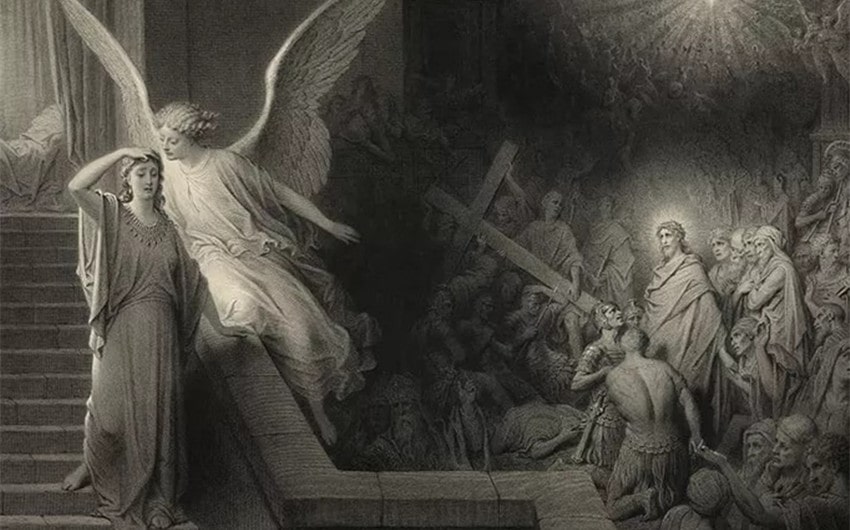
From medieval manuscripts to Renaissance paintings to modern cinema, artists have been drawn to the emotional depth of Pilate’s wife. In many works, she is portrayed standing beside her husband, pleading for justice or recoiling from the brutality of the trial. Her expression often carries sorrow or spiritual unease, reinforcing her role as a voice of conscience.
Modern films, including adaptations of the Passion story, frequently expand her presence, allowing audiences to imagine her inner turmoil, her relationship with Pilate, and the weight of her dream. Writers and playwrights have also used her character to explore themes of moral responsibility, domestic influence, and spiritual awakening.
Her continued relevance in art and storytelling underscores the enduring power of her small but profound appearance in scripture.
The Legacy of Pontius Pilate’s Wife
The legacy of Pontius Pilate’s wife is one of enduring mystery and symbolism. Whether known as Claudia Procula or remembered simply as the unnamed dreamer in Matthew’s Gospel, she represents the voice that tries to prevent injustice, the insight that recognizes innocence, and the courage to speak truth—even when no one listens. Her story reminds readers that even the smallest moments in scripture can shape centuries of reflection and artistic expression.
In the end, her identity may remain uncertain, but her influence is unmistakable. Her dream, her warning, and her moral clarity continue to inspire readers seeking a deeper understanding of the human heart within sacred history.
Featured Image Source: ncregister
