Cris Cyborg Career Story: Titles, Fighting Style, and What She’s Doing Now
Cris Cyborg is one of the most dominant names women’s MMA has ever produced, and her résumé is so stacked it can feel unreal until you line it up year by year. She’s won belts across multiple major promotions, built a reputation on relentless pressure, and kept evolving long after most fighters settle into one version of themselves.
Who Is Cris Cyborg?
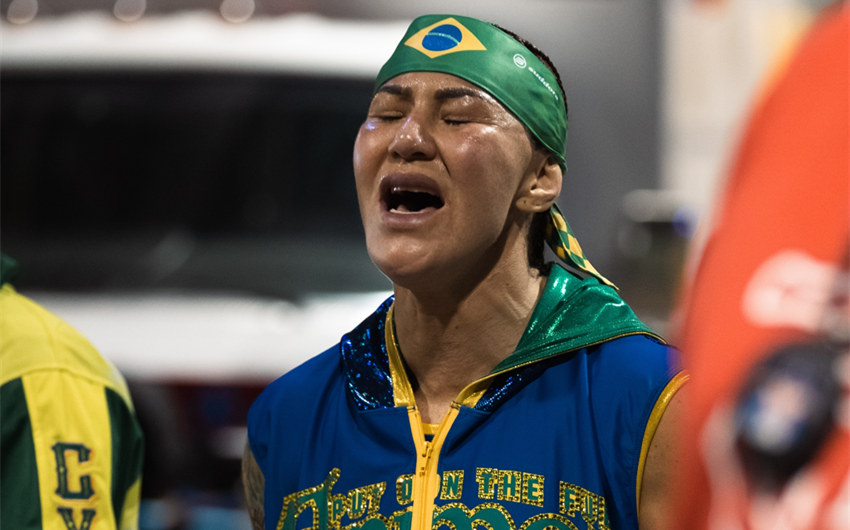
Cris Cyborg is the professional name of Cristiane Justino Venâncio, a Brazilian-American combat sports athlete best known for elite-level mixed martial arts, with additional experience in boxing and kickboxing. She rose to worldwide prominence for a style that blends heavy-handed aggression with veteran composure—meaning she can overwhelm you early, but she also knows how to pick moments and manage rounds like a champion.
In MMA circles, Cyborg is often discussed as a “generation-defining” fighter because her dominance didn’t happen in one organization or one era. She has repeatedly moved into new promotions, faced new challengers, and still found ways to win titles.
Early Life and How Her Fighting Career Started
Cyborg was born in Curitiba, Brazil, and developed her foundation in striking arts that are deeply woven into Brazilian fight culture. Like many Brazilian fighters who came up through tough gyms, her early identity was built on pressure: walk forward, make opponents uncomfortable, and turn every exchange into a test of will.
As her career progressed, she added layers—better shot selection, improved clinch work, smarter pacing, and a more complete grappling threat than casual fans sometimes assume. The key point is that she didn’t stay static. She kept building.
What Makes Cris Cyborg’s Style So Hard to Deal With
Cyborg’s most famous weapon is her striking power, but what breaks opponents isn’t only the power—it’s the pace. She pushes forward behind combinations, forces you into defensive reactions, and makes it hard to breathe comfortably in the cage. When you’re constantly backing up, you’re not scoring, you’re not setting traps, and you’re slowly losing confidence.
Her clinch game is another underrated piece. Cyborg is physically strong, and she uses that strength to bully opponents into bad positions, land short shots, and keep them from resetting at long range. And if an opponent overcommits on grappling or scrambles sloppily, Cyborg has the experience to capitalize.
The Championships That Define Her Legacy
Cyborg’s legacy is often summed up by one idea: she has held world titles across multiple major promotions. That matters because it’s much harder than winning one belt in one era. Different organizations have different weight classes, different contenders, and different matchmaking politics. Repeatedly capturing championships across promotions suggests something simple: the fighter is elite no matter the setting.
Her run includes championship success in organizations that defined women’s MMA at different moments—Strikeforce in the earlier mainstream wave, the UFC during its peak global expansion, and later major promotions that built strong women’s divisions around her star power.
The Gina Carano Fight and the Moment the World Paid Attention
For many fans, the fight that permanently put Cyborg on the mainstream map was her title win over Gina Carano in Strikeforce. That matchup carried enormous cultural weight at the time because women’s MMA was still fighting for consistent respect on big platforms.
Cyborg’s performance sent a clear message: women’s MMA could be violent, technical, and undeniably high stakes. It wasn’t “novelty.” It was real, elite combat—and she was at the center of it.
Her UFC Chapter: What It Proved About Her Skill Set
Cyborg’s UFC period mattered because the UFC is where global scrutiny is loudest. Every weakness gets dissected, every decision gets debated, and every champion becomes a magnet for pressure. Cyborg didn’t just survive that environment—she won a UFC world title and defended her position as an all-time great.
Her UFC run also showcased a more complete version of her game than many people expected. She wasn’t just storming forward. She was controlling distance better, fighting with more patience when needed, and showing she could operate as a strategic champion rather than only a force-of-nature finisher.
Life After the UFC: Why She Kept Winning Elsewhere
Some fighters leave the UFC and fade into “what if” conversations. Cyborg did the opposite. She continued collecting elite wins, kept taking high-level challenges, and added more titles to her record. That consistency is part of why her name stays near the top of any women’s MMA “greatest of all time” debate.
When a fighter can win championships across multiple eras and multiple promotions, it’s a sign their dominance wasn’t built on one perfect matchup or one ideal moment. It was built on real skill and real adaptability.
Cris Cyborg in the PFL: Recent Title News and What’s Next
In late 2025, Cyborg added another headline-making accomplishment by winning the inaugural PFL women’s featherweight championship, defeating Sara Collins. The win mattered for two reasons: it added yet another major belt to her career, and it showed she could still perform at a championship level deep into a long, physically demanding career.
After that title win, she spoke publicly about retirement being on the horizon, suggesting she expects to have one more MMA fight in 2026 before stepping away. If that ends up being the final chapter, it’s the kind of “walk off with the belt” storyline most fighters never get.
Does Cris Cyborg Have a Husband?
Cyborg was previously married to fellow MMA fighter Evangelista “Cyborg” Santos. In older coverage and historical profiles, you’ll sometimes see her referred to by a former married name connected to that relationship. Their marriage later ended, and she has generally kept newer relationship details more private than her in-cage career.
If you’re looking for a simple, accurate way to phrase it: she had a well-known marriage earlier in her career, and she does not consistently present her current personal life as a public storyline.
Boxing and Crossover Combat Sports
Cyborg’s career isn’t limited to MMA. She has also competed in boxing, and her striking power tends to translate well because she already fights with a forward-driving mindset and heavy hands. For elite MMA strikers, boxing can be both a business opportunity and a technical challenge—different pacing, different defensive responsibilities, different rhythm.
What stands out with Cyborg is that she treats crossover competition like a real part of her legacy, not a one-off curiosity. She has continued to build her brand as a combat sports athlete, not only an MMA fighter.
What People Get Wrong About Cris Cyborg
Some fans still describe Cyborg as “only power,” as if she’s a one-note wrecking ball. That’s an outdated read. Power is the signature, but championships require more than power—especially across multiple promotions and multiple eras.
Her longevity is proof of evolution. Fighters who don’t adapt get solved. Cyborg has continued to win because she learned how to manage danger, pick smarter moments, and become more efficient without losing the intensity that made her famous.
How to Understand Her Place in Women’s MMA History
Cyborg’s place in history is easier to understand when you stop thinking in single-promotion terms. Her career is a long, continuous argument that elite dominance can travel. She has been the feared champion, the visiting superstar, the veteran defending her reputation, and the legend still collecting belts when people assume the story must be ending.
That’s why her name carries weight. Even fighters who never faced her directly trained in an era shaped by her existence. She raised expectations for what “dominant” looks like.